

Reefton Visitor Guide
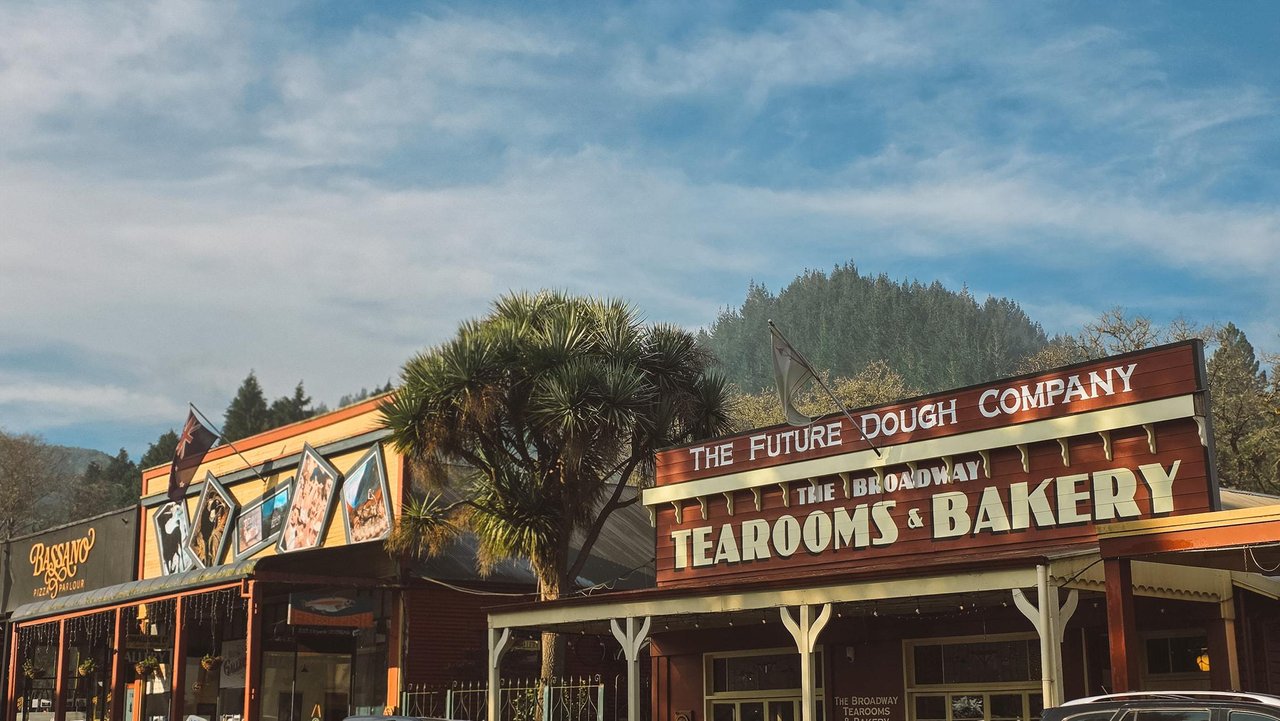
Reefton – credit Tess Row.
Reefton, Buller Kawatiri
The Town of Light and the West Coast’s only inland town
Set on river flats above the Inangahua River, between the Paparoa and Victoria mountain ranges, Reefton is Buller Kawatiri’s only inland town.
It was originally known as Quartzopolis and was established around 1870 to service the largest gold-bearing quartz reefs in the South Island.
Gold built the town, coal later helped sustain it, and today Reefton is a distinctive mix of heritage, outdoor access and community-led renewal.
Reefton has a scale that makes it easy to explore, but its history gives it far more depth than many towns of its size.
Broadway, the main street, is lined with restored veranda-fronted buildings, heritage pubs, small shops, places to eat and traces of the mining wealth that once made Reefton one of the most important inland settlements on the West Coast.
The Town of Light
Reefton’s most famous claim is well earned. In 1888, the town became the first place in New Zealand and the Southern Hemisphere to have a public electricity supply and electric street lighting.
The hydro-electric scheme on the Inangahua River powered the lights that gave Reefton its enduring nickname, the Town of Light.
That story is still visible in the landscape. The Bottled Lightning Powerhouse Walk begins at the Reefton Visitor Centre and crosses the Inangahua River to the remains of the powerhouse that lit the town in 1888.
It is a short 40-minute loop and one of the clearest ways to connect Reefton’s streetscape with the innovation that helped shape it.
The story of Reefton’s electricity did not end in the nineteenth century. After decades sitting silent following flood damage in 1946, the historic hydro-electric scheme has recently been restored by the Reefton Powerhouse Charitable Trust and once again produces electricity from the Inangahua River.
The Reefton Power Station
The original Reefton hydro-electric scheme began operating in 1888, becoming the first public electricity supply in New Zealand and the Southern Hemisphere.
A 2-kilometre water race carried water from Blacks Point to a powerhouse on the Inangahua River, where equipment shipped from England powered the town’s electric street lighting and supported the gold mining industry.
The scheme operated for decades before a major flood damaged the powerhouse in 1946, bringing electricity generation at the site to an end.
In 1988, following the centenary of the first electric lights in Reefton, local residents formed the Reefton Powerhouse Charitable Trust to restore the historic hydro scheme.
After years of fundraising, planning, consenting and construction, the project has now brought the station back to life.
The restored scheme now generates around 220 kilowatts of electricity and feeds power into the national grid.
Revenue from the electricity, estimated at about $200,000 per year, is reinvested into the project and the local community.
The redevelopment has also transformed the area into a public recreation space along the Inangahua River, with pedestrian access and interpretation explaining the history of the hydro scheme.
Today, the site is both a working power station and a visitor attraction, highlighting the ingenuity that helped shape Reefton’s early development.
History, heritage and the making of Reefton
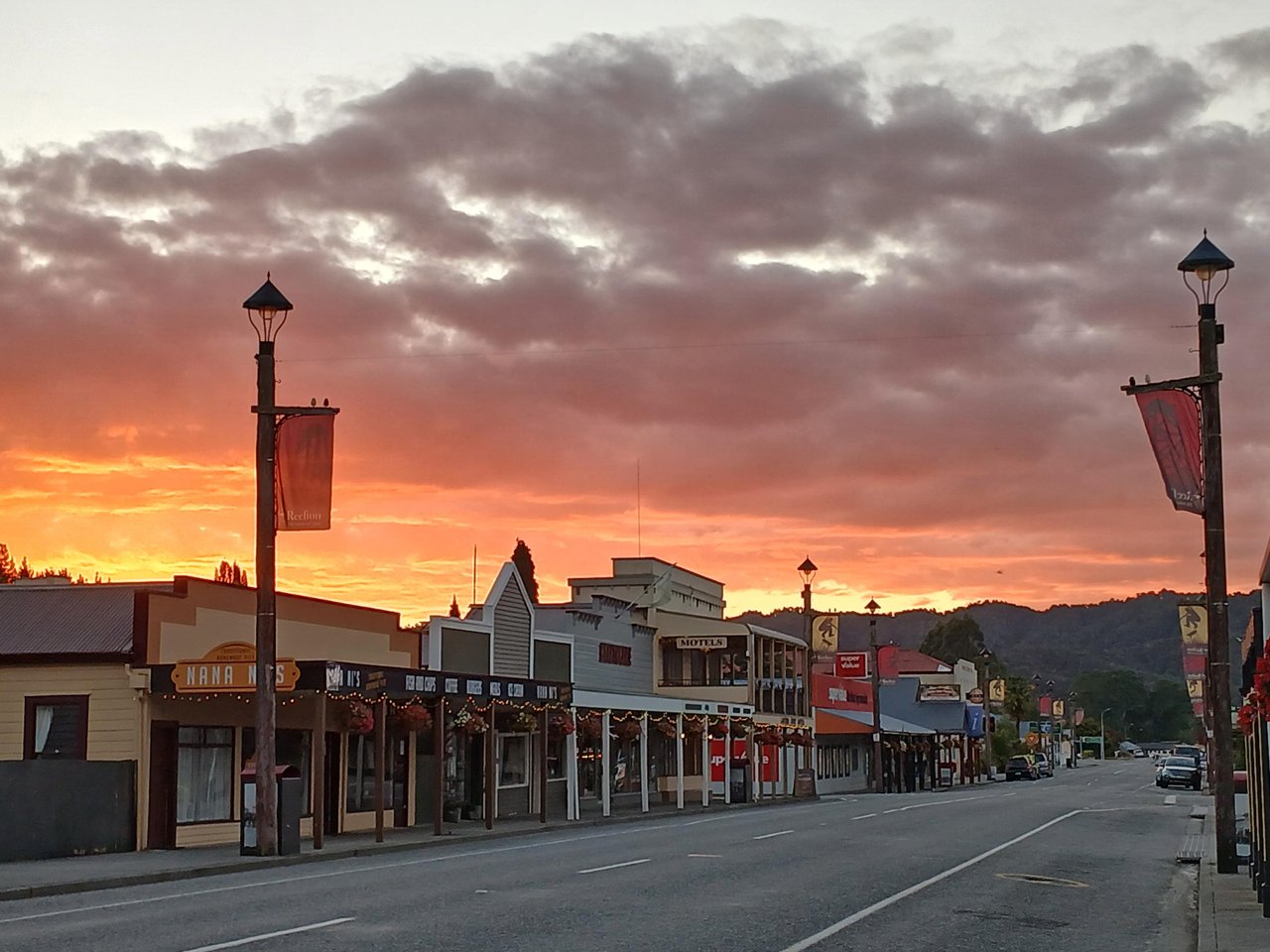
Broadway at Sunset – credit Lisa Bradshaw
Gold discoveries in the 1860s and 1870s transformed Reefton into a booming quartz mining centre.
Unlike many alluvial gold settlements, Reefton’s prosperity was tied to hard rock mining, which required more machinery, more capital and more infrastructure.
That industrial scale helps explain why the town developed so strongly and why so many substantial buildings still remain.
Broadway still carries much of that early character. Notable historic buildings include the Surveyor’s House dating from 1871, the Oddfellows Hall from 1872, the Courthouse from 1873, the Bank of New Zealand from 1873, the National Bank from 1873, the Catholic Church from 1877, St Stephens Anglican Church from 1878, the Reefton School of Mines from 1886 and the Band Hall from 1901.
Many of these buildings have been restored and repurposed, now housing accommodation, eateries, shops and community spaces that keep the town centre active rather than frozen in time.
The School of Mines is one of the clearest reminders of how seriously mining knowledge was taken here. Reefton was not just a place where people chased luck. It was a place where geology, engineering and extraction methods mattered, and where technical skill sat alongside hard physical work.
That practical spirit is still part of the town’s identity.
Reefton walks and the mining landscape
Beyond the town’s heritage buildings lies the wider mining landscape that made Reefton possible.
The surrounding hills and valleys connect into Victoria Forest Park, a vast protected area that includes the Victoria and Brunner Ranges and the upper catchments of the Inangahua, Maruia and Upper Grey rivers.
This setting gives Reefton immediate access to bush walks, tramping routes, mountain biking trails, river valleys and old mining tracks.
Some of the local walks start right from Broadway, while others require a short drive into the surrounding ranges.
The routes are more than just scenic. Many follow former tram lines, pack tracks and mining roads, or lead to sites where quartz was crushed, coal was hauled, and whole communities once worked in difficult country.
Alborns Coal Mine Track is a 2.7 km loop reached from Soldiers Road off SH7. It takes around 1 hour and 30 minutes and passes old coal mine workings, remnants of winch equipment and an old Leyland lorry, with views out to the Victoria and Paparoa ranges.
Kirwans Track heads deeper into the Victoria Range on a historic pack track, leading to Kirwans Hut and, for those continuing on, towards Montgomerie Hut past quartz workings and old cableway routes.
Related: Walking and Hiking in Buller Kawatiri
Waiuta and the ghost towns of the hills
One of the most important day trips from Reefton is Waiuta, signposted from SH7 south of town.
Once one of the West Coast’s best-known mining settlements, Waiuta was founded in 1906 to work the Blackwater mine and eventually produced nearly 750,000 ounces of gold from 1.5 million tons of quartz.
After operations ended in 1951, the town was largely abandoned, leaving behind one of the country’s most compelling ghost towns.
The Waiuta Town Walk is a 2 km loop taking about 1 hour and 30 minutes.
It passes the Blackwater mine, settlement remains, and former recreation areas, with interpretation along the way helping visitors picture what life was like when hundreds of people lived and worked here.
Other tracks extend the experience. The Prohibition Mine and Ball Mill track leads to New Zealand’s deepest mine shaft, sunk to 879 metres, while the Snowy Battery Track heads to substantial remains of the stamper battery where quartz was crushed for gold extraction.
Rivers, forest park and the outdoors
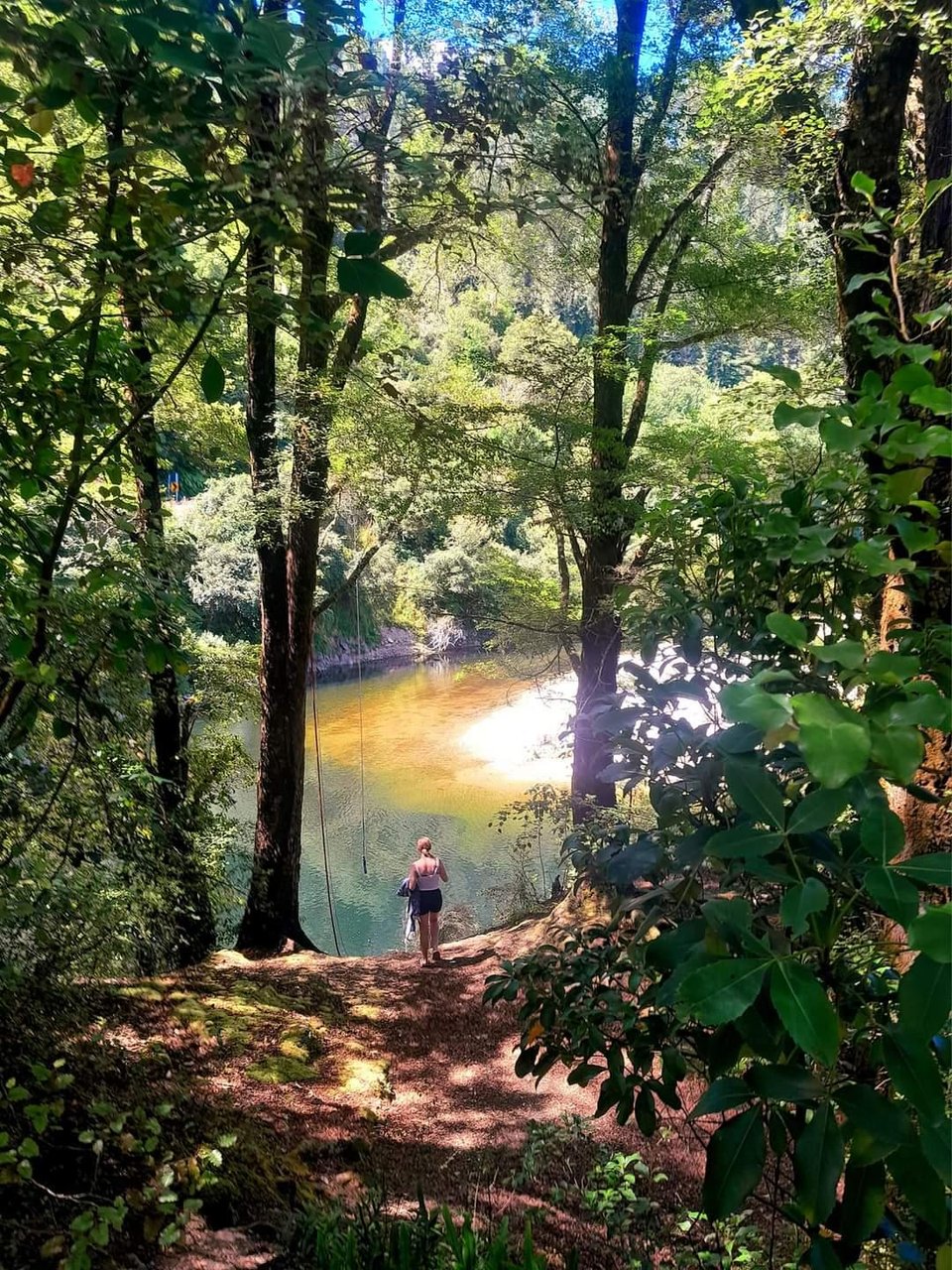
Swimming spot between Reefton and Blacks Point – credit Lisa Bradshaw
Reefton’s location between the Paparoa Range and the Victoria Range means the outdoors is not an add-on here. It is the backdrop to daily life.
The beech-clad country around town offers walking, mountain biking, four-wheel driving, and access to river systems that are the stuff of fishing legend amongst anglers.
The upper catchments of the Inangahua and Maruia rivers help define the wider landscape, and they are part of what gives inland Buller its spacious, uncrowded feel.
Further south-east, the road towards Lewis Pass opens up another side of the district, with alpine scenery and the thermal pools at Maruia Springs.
This makes Reefton a practical base for visitors wanting a mix of heritage, bush walks, mountain landscapes and hot pools without changing towns every night.
Rail heritage and other town landmarks
Reefton’s heritage is not limited to mining.
The town is also notable for its rail history, including the world’s only surviving Single R Class Fairlie locomotive, displayed in its original form in the heart of town.
Just outside Reefton on SH69 towards Westport, the old railway precinct retains the 1892 station and New Zealand’s only remaining single-row two-stall steam engine shed, both built by the Midland Railway Company.
Together, they add another layer to the story of how this inland town connected to the rest of the country.
Visitor information
The best place to begin is the Reefton Visitor and Service Centre at 67-69 Broadway.
It is the main source of local advice on walks, heritage sites, roads and current conditions, and it also houses the replica Quartzopolis underground mine experience, which introduces the story of gold and electricity in the district.
From there, it is easy to explore Broadway on foot, call into local businesses, head out to the powerhouse site, or use Reefton as a base for longer outings into Victoria Forest Park, Waiuta, Maruia and the wider inland Buller area.
Why Reefton stands out
Reefton is more than a pretty heritage main street. It is a place where the geography, the mining story, and the built environment still align clearly.
You can stand on Broadway, look towards the Paparoa and Victoria ranges, cross the Inangahua River to the remains of the original powerhouse and the newly relaunched project, then drive out to ghost towns, mine shafts, bush tracks and river valleys that explain exactly how this town came to be. That is what makes Reefton memorable.